Recommendations for Craftsmanship and Material Selection in Small-Batch from custom action figure factories.
As an experienced Chinese custom action figure factories, Zhongyi Animation recommends the following processes and materials for small-batch production and analyzes their advantages. When a company or studio wants to produce 500 custom anime figures, choosing the right manufacturing process and materials is crucial.
-
Recommendations from custom figurine manufacturers regarding the use of 3D printing processes and materials.
For small-batch figure production, 3D printing is a process worth prioritizing for Chinese custom action figure factories. In terms of materials, photosensitive resin is an excellent choice for 3D printing. This material offers high precision, accurately reproducing complex details of the figure, such as the facial expressions and clothing textures of anime characters. From a cost perspective, although photosensitive resin itself has a certain price, for small-batch production of fewer than 500 units, 3D printing eliminates the need for mold making, thus avoiding high mold costs and effectively controlling overall costs. 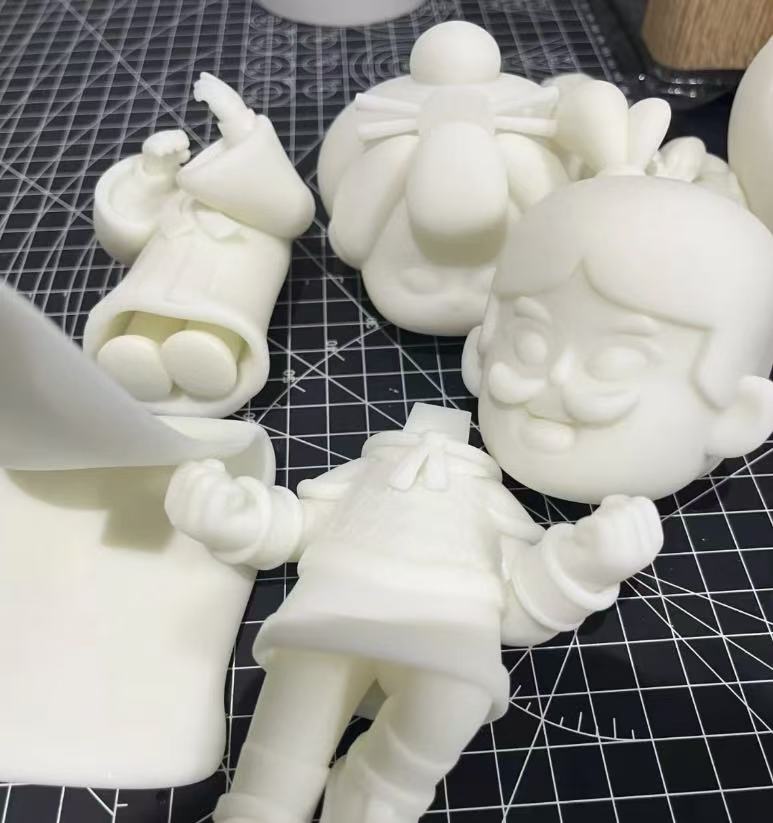
Technologically, 3D printing technology is now quite mature, and Chinese custom action figure factories can easily achieve the printing of various complex shapes using high-precision 3D printers. Furthermore, 3D printing has a relatively short production time, usually completing the printing work within a few days, quickly meeting customer needs for samples or small-batch products.
-
Recommendations from custom figurine manufacturers regarding the use of silicone molding process and materials.
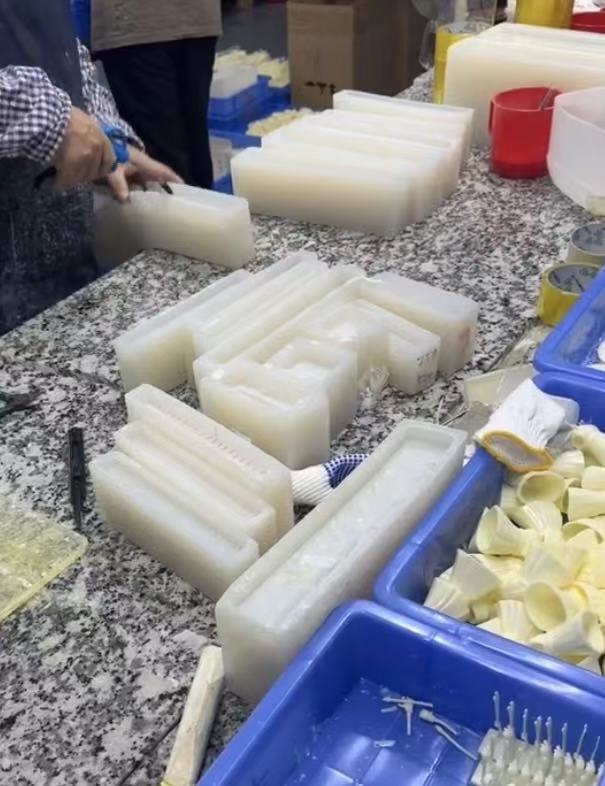
Another process suitable for small-batch customization is silicone molding. Mold silicone and PU resin are commonly used material combinations for this process. Two-component liquid silicone rubber is often used for the mold silicone; the elastomer mold formed after curing can accurately replicate every detail of the figure prototype. PU resin, after curing, has high hardness and good texture, allowing for the fine display of the figure’s appearance characteristics.
In terms of material properties, mold-making silicone has extremely high flexibility. This prevents damage to the prototype model during the demolding process. It also possesses good chemical inertness, allowing for repeated use. This reduces long-term costs. For Chinese custom action figure suppliers, silicone molding technology has a low technical barrier. It is easy to master and is suitable for injection molding with various resin materials.
In terms of cost, the mold making cost of silicone molding is relatively low. This is especially true compared to large-scale production processes such as injection molding. As a result, silicone molding is more suitable for small-batch production. In terms of production time, mold making takes time. However, once the suppliers complete the mold, the speed of replicating the figurines increases. This allows them to finish a certain number of production tasks in a shorter time.
For custom anime figurine orders of fewer than 500 pieces, Chinese custom action figure factories find 3D printing and silicone molding to be ideal choices. These methods offer advantages in materials, cost, technology, and production time. Suppliers can flexibly choose the appropriate process and materials. This decision depends on the client’s specific needs, the design characteristics of the figurine, and the budget. The goal is to produce high-quality and cost-effective custom anime figurines.